Dental Implant Treatment in the Minneapolis–St. Paul Area

Jaw pain, stiffness, and difficulty opening or closing your mouth can interfere with everyday activities such as eating and speaking. At Associated Oral & Maxillofacial Surgeons (AOMS), our oral surgeons evaluate and treat TMJ disorders to help patients manage discomfort and improve jaw function.

Serving patients throughout the Twin Cities and surrounding Minnesota communities, AOMS provides personalized TMJ evaluations to help identify the source of your symptoms and recommend appropriate treatment options.

Restore Your Smile With Dental Implants

Dental implants are designed to replace missing teeth by providing a stable foundation for replacement teeth. Dental implants are placed directly into the jawbone to function as artificial tooth roots, providing a stable foundation for crowns, bridges, or dentures.

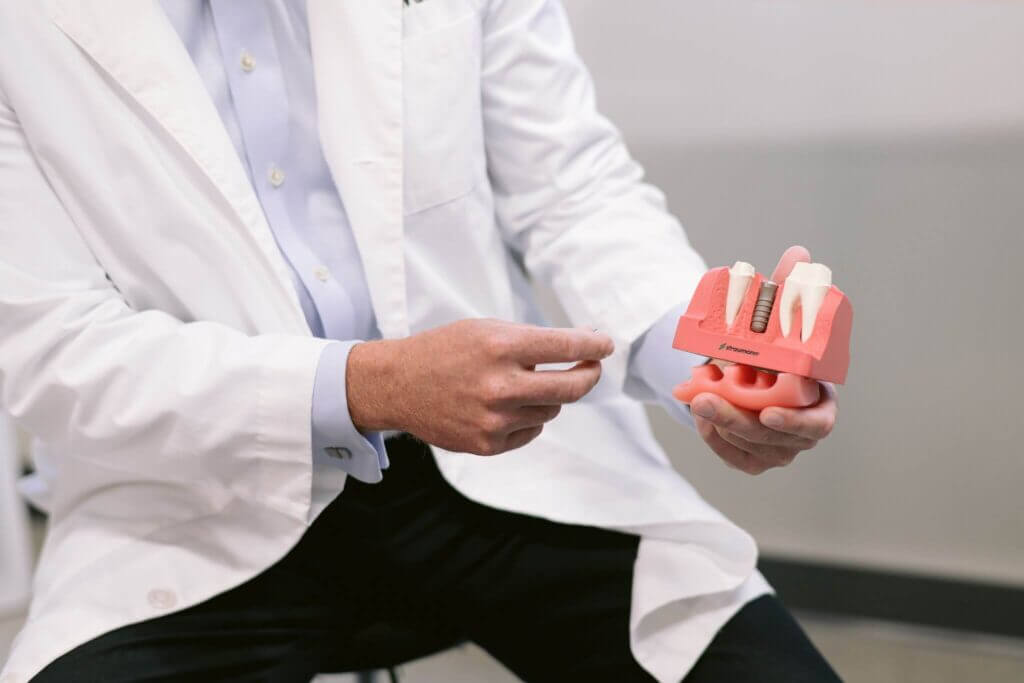
An implant typically consists of a small titanium post placed in the jawbone, an abutment that connects to the implant, and a custom restoration, such as a crown, bridge, or denture. As the implant integrates with the surrounding bone, it creates a secure foundation for your replacement teeth.

Our goal is to evaluate your oral health, explain your options, and help you determine which tooth replacement approach is right for you.
senior woman smiling

Dental Implant Solutions Across the Twin Cities

Not every patient needs the same type of dental implant treatment. The number of missing teeth, the condition of your jawbone, and your treatment goals all help determine the most appropriate solution.

AOMS offers several tooth replacement options, along with procedures that may help prepare your jawbone for implant placement.

Replacing One or Multiple Missing Teeth

Dental implants can replace a single missing tooth or support a bridge for multiple missing teeth. They provide a stable foundation for replacement teeth without relying on adjacent healthy teeth for support.

Full-Arch Dental Implants

For patients missing most or all teeth in an upper or lower arch, strategically placed dental implants can support a complete set of replacement teeth, offering improved stability and function.

Implant-Supported Dentures

Implant-supported dentures use dental implants to provide greater stability than traditional dentures. Different attachment systems, including bar attachments, may be available depending on your treatment needs.

All-on-4 Dental Implants

We offer Same Day Teeth, a full-arch implant solution that may allow eligible patients to receive temporary replacement teeth on the day of implant placement, with a final restoration completed after healing.

Bone Grafting for Dental Implants

When the jawbone lacks sufficient support for dental implants, bone grafting may help rebuild the area and prepare it for dental implant placement.
Learn About Bone Grafting

Benefits of Dental Implants

Dental implants offer several advantages for patients seeking a long-term tooth replacement solution:

• Natural appearance and function: Implant-supported replacement teeth are designed to look and function like natural teeth.
• Improved chewing and speaking: Stable replacement teeth can make everyday activities more comfortable.
• Jawbone preservation: Dental implants stimulate the surrounding bone and help reduce the bone loss associated with missing teeth.
• Support for neighboring teeth: Unlike traditional tooth-supported bridges, individual dental implants generally do not require reshaping adjacent healthy teeth.
• Long-lasting tooth replacement: With proper oral hygiene, regular dental care, and appropriate maintenance, implants can function for many years.

The benefits of dental implants depend on your oral health, treatment needs, and the type of restoration selected.

What to Expect During Dental Implant Treatment

Dental implant treatment is planned around your individual needs. While the process varies depending on the number of implants and whether additional procedures are necessary, it generally includes several stages.

Consultation and Treatment Planning

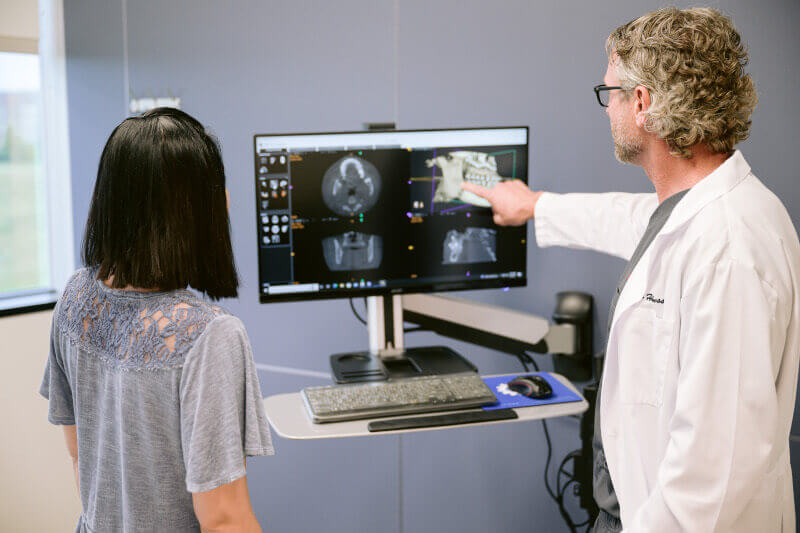
Your oral surgeon will review your dental and medical history, examine your mouth, and evaluate your jawbone. Diagnostic imaging may be used to assess available bone and determine the appropriate position for implant placement.
aoms doctor reviewing scan with patient
closeup of doc holding dental implant model

Dental Implant Placement

During surgery, the oral surgeon places the implant into the jawbone. Local anesthesia is used to numb the surgical area, and additional anesthesia or sedation options may be discussed based on your treatment needs.

Healing and Implant Integration

Following surgery, the surrounding bone gradually bonds with the implant through a process called osseointegration. Healing time varies depending on your condition and the treatment performed.
dental implant illustration - Associated Oral and Maxillofacial Surgeons
Senior couple smiling

Final Tooth Restoration

Once the implant is ready to support the restoration, your restorative dentist completes the replacement tooth, bridge, or denture. Our oral surgeons work with your dentist to coordinate the surgical and restorative phases of your care.

For more information about each stage, review our overview of the dental implant placement procedure.

Dental Implant Care at Associated OMS

Choosing an experienced surgical team is an important part of dental implant treatment. Our doctors have advanced training in oral and maxillofacial surgery, including procedures involving the teeth, jaws, and surrounding facial structures.

Since 1972, AOMS has served Minnesota communities with surgical expertise, individualized treatment planning, and a focus on patient comfort. With offices in Buffalo, Coon Rapids, Elk River, Maple Grove, and Monticello, our team provides dental implant care for patients throughout the greater Minneapolis–St. Paul area.

Our approach includes careful evaluation of jawbone health, precise implant placement, and coordination with your restorative dentist. When appropriate, our team can use 3D imaging technology to assess anatomy and support surgical planning.

From your initial consultation through postoperative care, we focus on helping you understand each stage of treatment and feel informed about your options.

Frequently Asked Questions

Am I a good candidate for dental implants?

Many adults who have lost one or more teeth may be candidates for dental implants. Your oral surgeon will evaluate your overall health, jawbone structure, gum health, and treatment goals. If you have experienced bone loss, additional procedures such as bone grafting may help prepare the area for implant placement.

Can dental implants replace all of my missing teeth?

Yes. Dental implants can support individual replacement teeth as well as full-arch restorations for patients missing all their upper or lower teeth. The number of implants and type of restoration depend on your jawbone health and treatment needs. Your oral surgeon can help determine which options are appropriate for you.

How long does the dental implant process take?

Treatment time varies based on the number of implants, the condition of your jawbone, and whether extractions or bone grafting are necessary. While some patients may receive temporary replacement teeth on the day of surgery, others require several months of healing before the final restoration is placed. Your surgeon will explain the expected timeline during your consultation.

Is dental implant surgery painful?

Local anesthesia is used during implant placement to numb the surgical area, and sedation options may be available for your comfort. Some soreness, swelling, or tenderness is common after surgery, but your oral surgeon will provide instructions to help manage discomfort during recovery.

How long do dental implants last?

Dental implants are designed to provide long-term support for replacement teeth and can last for many years with proper care. Their longevity depends on factors such as oral hygiene, overall health, bone support, and regular dental maintenance. The attached crown, bridge, or denture may require repair or replacement over time.